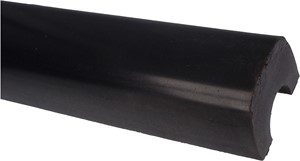
Roll Cage Padding for Racing Cars and Motorsport Safety
Roll cage padding is an important safety component in racing cars, rally vehicles and other motorsport applications equipped with a protective safety cage. Although a roll cage provides structural protection, its rigid metal tubes can become dangerous contact points during an impact. Correctly selected padding helps manage contact between the occupant and the surrounding cage structure.
The Autosport Company supplies roll cage padding for circuit racing, rallying, track days and specialised competition vehicles. Our range includes FIA-homologated impact protection and non-FIA roll bar foam in different sizes and colours.
Whether you are completing a new racing cockpit or replacing existing safety padding, choosing the correct material depends on the tube dimensions, the position of the padding and the safety regulations applicable to your vehicle.
Why Is Roll Cage Padding Important?
The safety cage of a competition vehicle is usually constructed from steel tubing designed to provide structural protection in defined accident conditions.
However, the rigid surfaces of the cage may be located close to the driver's helmet, shoulders and other parts of the body.
During sudden vehicle movement or an impact, contact with these surfaces can generate considerable forces.
Purpose-designed roll cage padding introduces an energy-absorbing layer between the occupant and the metal tubing. Its protective performance depends on the foam structure, impact characteristics, installation and intended application.
Common applications include:
- Circuit racing cars with a safety cage.
- Rally and rallycross vehicles.
- Touring cars and endurance racing vehicles.
- Purpose-built drift cars.
- Track day cars fitted with roll cages.
- Specialised competition vehicle cockpits.
Not all protective foams provide the same level of protection. In particular, helmet contact areas may require padding meeting a defined FIA safety standard.
FIA 8857-2001 Type A Roll Cage Padding
In many regulated motorsport categories, the padding used where an occupant's helmet could contact the safety cage must comply with FIA Standard 8857-2001 Type A.
This standard applies to specially developed roll cage padding with tested protective characteristics for the specified impact conditions.
FIA-homologated padding is designed to manage impact energy rather than simply provide a soft covering over the tube.
Depending on the product, the protective profile may incorporate a broad or relatively flat impact surface intended to provide appropriate contact characteristics when positioned correctly.
When purchasing FIA roll cage padding, verify:
- The exact FIA homologation of the selected product.
- Compliance with FIA 8857-2001 Type A where required.
- The compatible roll cage tube diameter.
- Correct orientation of the impact protection surface.
- The manufacturer's permitted installation method.
- Any additional championship-specific requirements.
The FIA maintains Technical List 23 for homologated roll cage padding. Check the relevant product identification and current event regulations before using the padding in competition.
Non-FIA Roll Bar Foam for Selected Applications
Non-FIA roll cage padding provides an alternative for vehicles and activities where FIA-homologated padding is not required and the chosen material is permitted.
Our non-FIA padding is manufactured from flame-retardant foam rubber and is designed to provide a protective covering around compatible roll cage tubes.
The material can help cushion incidental contact with suitable areas of the cage. Different colour options also allow customers to match the padding to the appearance of a custom racing cockpit.
Non-FIA foam may be relevant for selected track day vehicles, display cars and other specialised installations.
However, it must not be used as a substitute for FIA Type A padding where that specific standard is mandatory.
The fact that an event does not require FIA homologation does not automatically mean that every type of foam padding is acceptable. Always follow the relevant event and vehicle requirements.
FIA Padding vs Conventional Foam Padding
One common question concerns the difference in feel between FIA-approved padding and conventional roll bar foam.
Energy-Absorbing FIA Padding
FIA roll cage padding is developed to meet particular impact performance requirements. Its construction is intended to absorb energy under the defined test conditions.
As a result, FIA padding may feel much firmer than conventional cushioning foam.
This firmness should not be mistaken for a lack of protection. The relevant consideration is how the material performs under the prescribed impact conditions.
Non-FIA Protective Foam
Conventional non-FIA padding may be softer and more flexible, making it suitable for certain general cushioning applications.
However, visual similarity or a soft feel does not establish equivalent impact protection.
Material selection should therefore begin with the area being protected and the safety standard required for that location.
Choosing Roll Cage Padding by Tube Diameter
Roll cage tubes are available in different diameters depending on the vehicle design and applicable safety cage requirements.
Padding must fit the actual tube dimensions. Selecting the correct profile helps ensure the material can be positioned and secured according to its installation instructions.
Our range includes FIA padding options for tube sizes such as 29–38 mm and 45–51 mm, depending on the individual model.
Before ordering, measure the outside diameter of the tube rather than estimating its size from appearance.
Also consider:
- The internal profile of the padding.
- The specified compatible tube diameter range.
- The total external dimensions once installed.
- Available clearance around the driver's helmet.
- The required direction of the impact surface.
- Available attachment space and fixing method.
A correctly sized product is essential for a secure installation and appropriate positioning of the protective material.
Roll Cage Padding Lengths and Custom Fitment
Different sections of a safety cage require different lengths of padding.
Our selection includes products supplied in longer sections, such as a 90 cm FIA padding option for compatible tube diameters.
Depending on the product and its installation instructions, these sections may be prepared for a particular area of the cage.
When cutting padding to length, it is important to preserve the required protective profile and avoid damaging the energy-absorbing material.
Competition rules may restrict modifications to mandatory FIA padding, particularly where changes would affect the homologated cross-section or intended impact surface.
Always consult the manufacturer's instructions and current motorsport regulations before modifying or trimming a protective section.
Where Should Roll Cage Padding Be Installed?
Correct placement is as important as material selection.
In many racing categories, special attention is required around areas where the driver's or co-driver's helmet could contact the safety cage during an impact.
Depending on the vehicle and regulations, these areas may include:
- Upper sections of the main roll hoop.
- Front cage tubes close to the occupants.
- Roof bars and roof reinforcement sections.
- Side cage structures within helmet contact range.
- Other locations identified in the applicable safety cage regulations.
The exact requirements must be determined using the relevant FIA Appendix J article or the technical regulations of the competition.
Areas where the occupant's body could contact the cage may also require suitable flame-retardant protection.
The cockpit should be assessed with the driver wearing the helmet and restraint equipment, seated in the normal driving position with the harness fastened.
Correct Installation of FIA Roll Cage Padding
FIA roll cage padding must remain securely positioned on the tube it is intended to protect.
Depending on the design, padding may have a shaped internal channel or an opening that allows it to fit around a compatible cage tube.
Correct installation involves several important checks:
- The selected padding matches the tube diameter.
- The designated impact surface faces the relevant contact area.
- The full required tube section is protected.
- The padding cannot rotate or slide out of position.
- The fixing method meets the manufacturer's instructions.
- Helmet clearance and cockpit accessibility are maintained.
- The protective profile has not been damaged or improperly modified.
Where FIA rules require permanent attachment, the material must be fixed in a way that prevents movement relative to the safety cage.
Do not assume that placing foam loosely around a tube or using an arbitrary fastening method is sufficient.
After installation, check that the complete protective arrangement complies with the relevant motorsport regulations.
Roll Cage Protection for Rally Drivers and Co-Drivers
Rally cars frequently have compact interiors containing closely positioned roof bars, diagonal tubes and structural cage members.
Both the driver and co-driver may be located near potential contact points.
When preparing a rally cockpit, the padding layout should be assessed separately for each seating position.
Helmet height, racing seat design, harness positioning and FHR equipment can all influence the space available around the occupant.
Correct padding placement must be combined with any minimum clearance requirements imposed by the relevant regulations.
Protective foam should never be used to compensate for an unsuitable seat position or an incorrectly installed safety cage.
Roll Cage Padding and Other Motorsport Safety Equipment
Roll cage padding contributes to occupant protection, but it is only one element of a complete motorsport safety system.
A racing cockpit may also include a homologated seat, multi-point racing harness, helmet, head and neck restraint equipment and additional protective structures.
These components are intended to work together within the vehicle's safety design.
For example, changing the racing seat position can alter helmet clearance to the roof bars and other cage members.
The entire cockpit should therefore be checked whenever major safety equipment is replaced or adjusted.
Explore our roll cage padding range together with other suitable roll cage and cockpit components.
Inspecting and Replacing Roll Cage Padding
Protective padding should be inspected regularly, especially after a collision or changes to the safety cage installation.
Inspect the material for:
- Cracks, splits or damaged surfaces.
- Permanent deformation from previous loading.
- Loose or damaged attachment points.
- Movement or rotation around the tube.
- Heat or chemical damage.
- Incorrect orientation following cockpit work.
Damaged or compromised padding should be replaced. Material subjected to significant impact must be assessed according to the manufacturer's requirements.
Do not attempt to repair a damaged energy-absorbing section using ordinary foam or unrelated filling materials.
Frequently Asked Questions About Roll Cage Padding
What is roll cage padding?
Roll cage padding is protective material installed around selected safety cage tubes to help manage contact between the occupant and the rigid cage structure.
When is FIA roll cage padding required?
Many competition regulations require FIA 8857-2001 Type A padding where a driver's or co-driver's helmet could contact the safety cage. The exact mandatory locations depend on the relevant regulations.
What does FIA 8857-2001 Type A mean?
FIA 8857-2001 Type A is a technical standard for specially tested roll cage padding intended for defined impact protection applications in motorsport.
What is the difference between FIA and non-FIA roll cage padding?
FIA-homologated padding meets the specified FIA standard for its approved application. Non-FIA padding does not carry that homologation and must only be used where its type is permitted and suitable.
Why is FIA roll cage padding harder than ordinary foam?
FIA padding is designed for specific impact energy management requirements. Its material may therefore feel firmer than conventional foam. Actual protective performance is determined by the relevant tests rather than softness alone.
How do I choose the correct roll cage padding diameter?
Measure the outside diameter of the roll cage tube and choose a product designed for that dimension. Also check the available clearance and mounting requirements.
Can FIA roll cage padding be cut to size?
Only in accordance with the product instructions and applicable competition regulations. Cutting must not compromise the required protective geometry or homologated characteristics.
Does every roll cage tube need padding?
Not necessarily. Mandatory locations are determined by the relevant regulations and potential occupant contact areas. Some competition categories specify particular roof and cage tubes that must be protected.
How should FIA roll cage padding be secured?
The padding must be secured in accordance with its manufacturer instructions and the applicable regulations. Where permanent fixation is required, it must not be able to move or rotate around the tube.
Is non-FIA roll bar foam suitable for track days?
It may be suitable for selected applications where permitted by the event organiser. It must not replace FIA Type A protection in areas where that standard is mandatory.
Buy Roll Cage Padding at The Autosport Company
The Autosport Company offers FIA-homologated and non-FIA roll cage padding for racing cars, rally vehicles, track day cars and specialised motorsport applications.
Choose from different tube diameter ranges, lengths and colour options to find suitable protective foam for your safety cage installation.
Before ordering, confirm the actual tube diameter, required protection length and technical rules of your competition.
If you need help selecting compatible roll cage padding, contact our team for advice. Order online or visit our showroom in Waalwijk, the Netherlands.