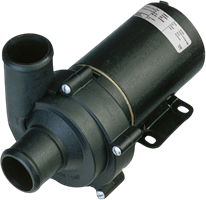
Water pumps for motorsport and automotive cooling systems
Efficient coolant circulation is essential for maintaining stable operating temperatures in demanding automotive applications. A suitable water pump helps transfer coolant through the cooling circuit, allowing heat to be carried towards radiators, heat exchangers and other cooling components.
Electric water pumps and coolant circulation pumps are used in racing vehicles, rally cars, performance applications and various technical installations. Different pump designs, flow capacities and connection sizes make it possible to select a suitable solution for specific cooling requirements.
Electric water pumps for controlled coolant circulation
Unlike a conventional mechanically driven pump, an electric water pump operates independently of engine speed. This makes it possible to manage coolant circulation according to the requirements of the cooling system, provided suitable electrical controls are installed.
Depending on the design and performance characteristics, electric pumps can serve as primary engine cooling pumps or auxiliary circulation pumps within separate cooling circuits.
Certain systems also allow coolant circulation after the engine has been switched off, helping manage residual heat in selected components. The available functionality depends on the pump and its electrical control system.
Applications for electric coolant pumps
Water circulation pumps can be incorporated into different cooling arrangements. The appropriate pump configuration depends on the required flow rate, system resistance, operating temperature and compatibility with the circulating fluid.
- Engine cooling: circulation of coolant through suitable engine cooling systems.
- Motorsport cooling: cooling circuits used in race cars, rally cars and performance vehicles.
- Intercooler systems: liquid circulation in suitable water-to-air intercooler installations.
- Turbocharger cooling: auxiliary coolant circulation for compatible water-cooled turbocharger systems.
- Electric vehicle cooling: thermal management circuits for selected electrical components.
- Auxiliary cooling: additional circulation within a separate or existing cooling circuit.
- Technical installations: circulation of compatible fluids in specialised equipment.
12V and 24V electric water pumps
Electric coolant pumps are available with different voltage requirements. Common automotive configurations include 12V and 24V systems, although other electrical specifications may also be available depending on the pump type.
A 12V electric water pump can be suitable for conventional passenger cars, motorsport vehicles and other applications using a compatible 12 volt electrical system. A 24V water pump may be used in vehicles or technical installations equipped with a suitable 24 volt power supply.
Always verify the required voltage, current consumption and electrical control specifications before installation. Incorrect electrical connections may cause pump malfunction or permanent damage.
Flow rate, pressure and cooling system performance
When choosing a coolant circulation pump, flow rate is one of the most important technical characteristics. Pump capacity is generally expressed in litres per minute (l/min), indicating the volume of fluid that can be transferred under specified operating conditions.
However, maximum advertised flow rate does not necessarily represent actual performance in an installed cooling circuit. Restrictions created by hoses, radiators, heat exchangers and fittings increase system resistance and may reduce the available flow.
Important specifications to consider include:
- Flow capacity: the volume of liquid the pump can circulate under specified conditions.
- Pump performance curve: indicates how the flow rate changes as system resistance increases.
- Operating voltage: compatibility with the vehicle or installation's electrical supply.
- Inlet and outlet dimensions: connection sizes required for the cooling hoses.
- Operating temperature: the permitted temperature range of the circulating liquid.
- Fluid compatibility: suitability for the coolant or other liquid used in the system.
- Installation dimensions: overall pump size and available mounting space.
- Duty cycle: whether the pump is intended for continuous operation or intermittent use.
Installing an electric water pump
Proper installation is essential for dependable pump performance. The pump must be securely mounted and connected using suitable hoses, clamps and electrical components.
Always follow the manufacturer's instructions regarding flow direction, mounting orientation and system bleeding. Some pumps require a flooded inlet and are not designed for dry running or self-priming operation.
Electrical wiring should be appropriately sized and protected with suitable fuses. Depending on the installation, a relay, controller or temperature-based switching system may be required.
Correct installation and proper coolant circulation help support consistent cooling performance and reliable operation.
Frequently asked questions about water pumps
What is the difference between a water pump and a circulation pump?
A water pump is a general term for equipment designed to move water or another compatible fluid. A circulation pump is specifically intended to circulate liquid through a circuit, such as an automotive cooling system. Both terms are commonly used for electric coolant pumps.
What are the benefits of an electric water pump?
An electric water pump operates independently of engine speed. Depending on its design and control system, this allows coolant flow to be managed according to cooling requirements and can make the pump suitable for additional cooling applications.
Can an electric water pump replace a mechanical pump?
Some electric water pumps are suitable for use as primary engine cooling pumps, but not all circulation pumps have sufficient capacity or pressure performance. The pump must be selected according to the engine's cooling requirements and system design.
How do I choose the correct water pump flow rate?
The required flow rate depends on the cooling load, system design and hydraulic resistance of the cooling circuit. Check the pump performance curve rather than relying solely on the maximum advertised flow rate.
What is the difference between 12V and 24V water pumps?
The main difference is the electrical supply voltage. A 12V pump is designed for a compatible 12 volt system, while a 24V pump requires an appropriate 24 volt supply. Other specifications, including capacity and current consumption, may also differ.
Can an electric coolant pump operate continuously?
Continuous operation depends on the pump's design and rated duty cycle. Some pumps are suitable for extended running periods, while others are intended for intermittent operation. Always check the manufacturer's technical specifications.
Can any water pump be used with engine coolant?
No. Pumps differ in material compatibility, temperature ratings and permitted fluids. Before installation, verify that the selected pump is suitable for the coolant mixture and operating conditions of the system.
Choosing the right water pump for your application
A correctly selected water pump helps maintain dependable coolant circulation in automotive, motorsport and technical cooling systems. Whether you need an electric coolant pump for a racing vehicle or an auxiliary circulation pump for a specialised installation, compare the required flow rate, operating voltage, connection sizes and performance characteristics to find a suitable solution.